Once in the Bay of Corinth, we proceeded to the small port of Itea, near the ancient city of Delphi, home of the famous Oracles.
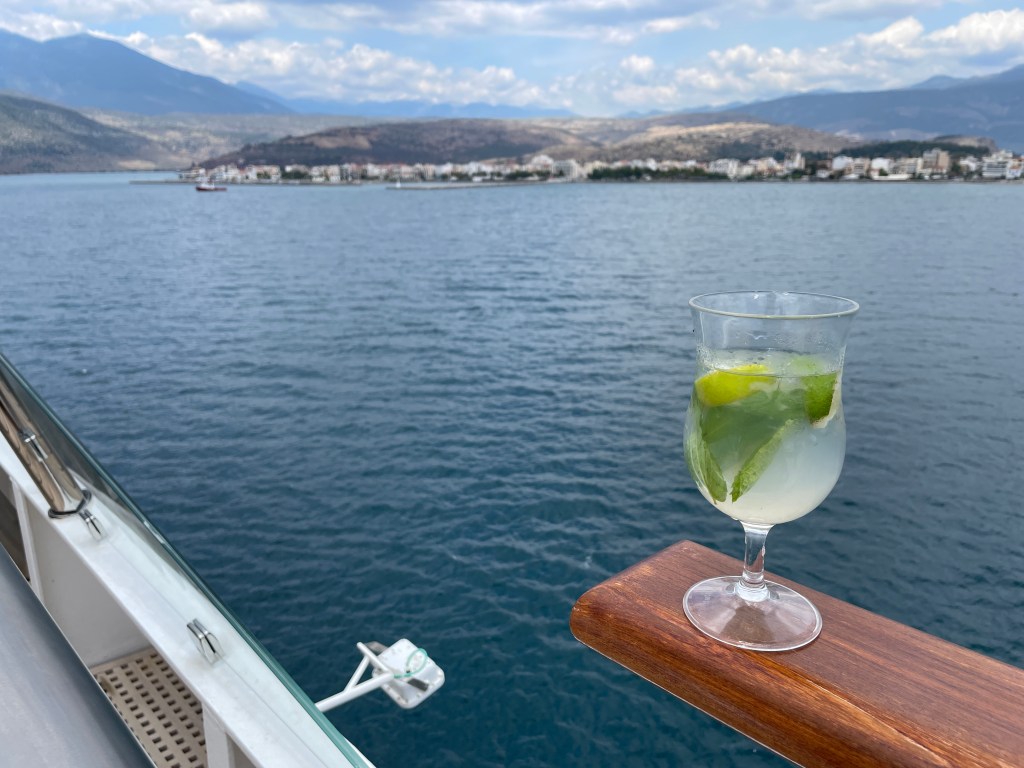
Approaching shore. Enjoying the first Mojito of the trip. Won’t be the last.
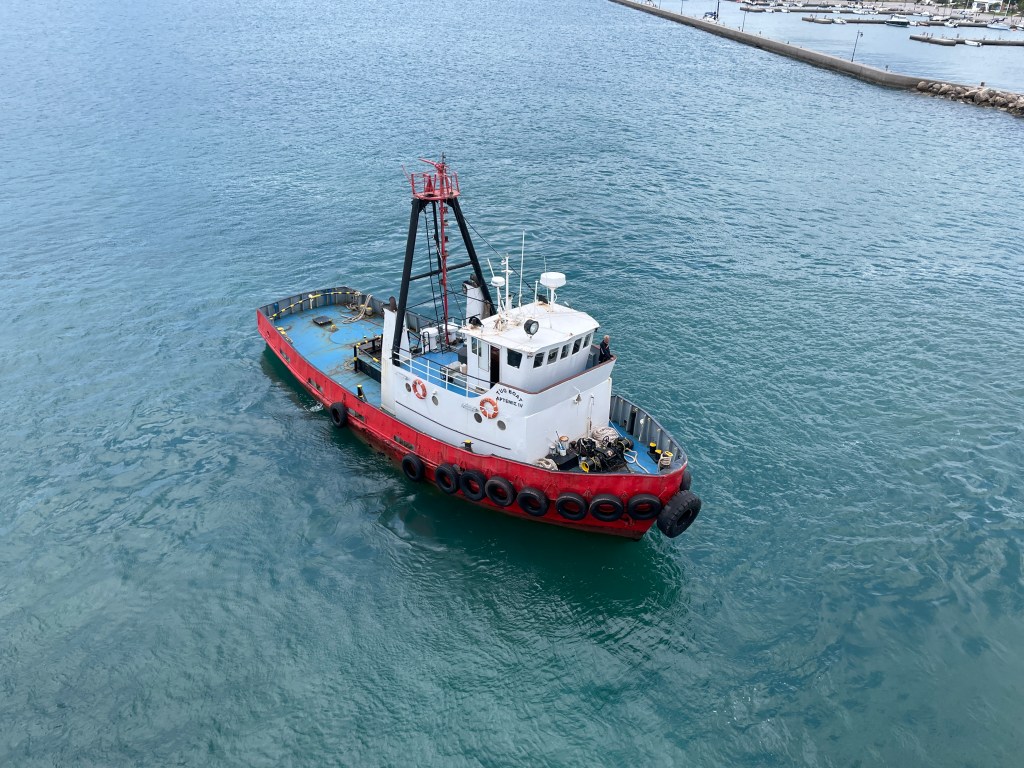
A cute little tugboat stands by while we dock. This happened everywhere, but nowhere was the tug needed; our captain precisely docked with bow and stern thrusters.
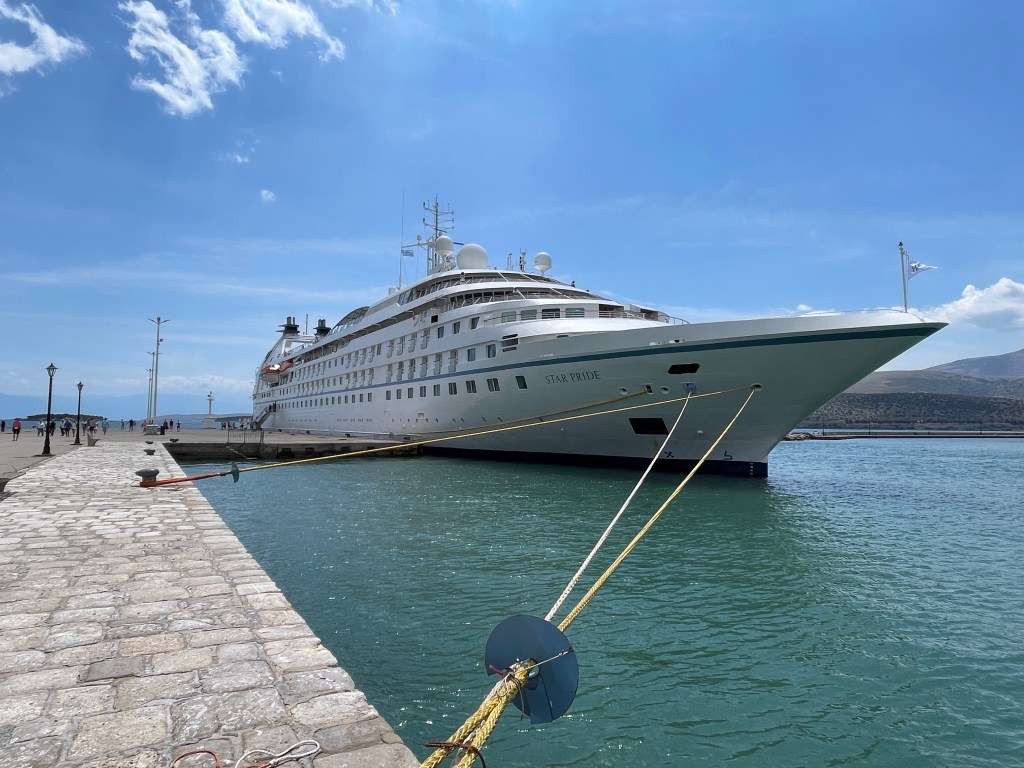
Docked!
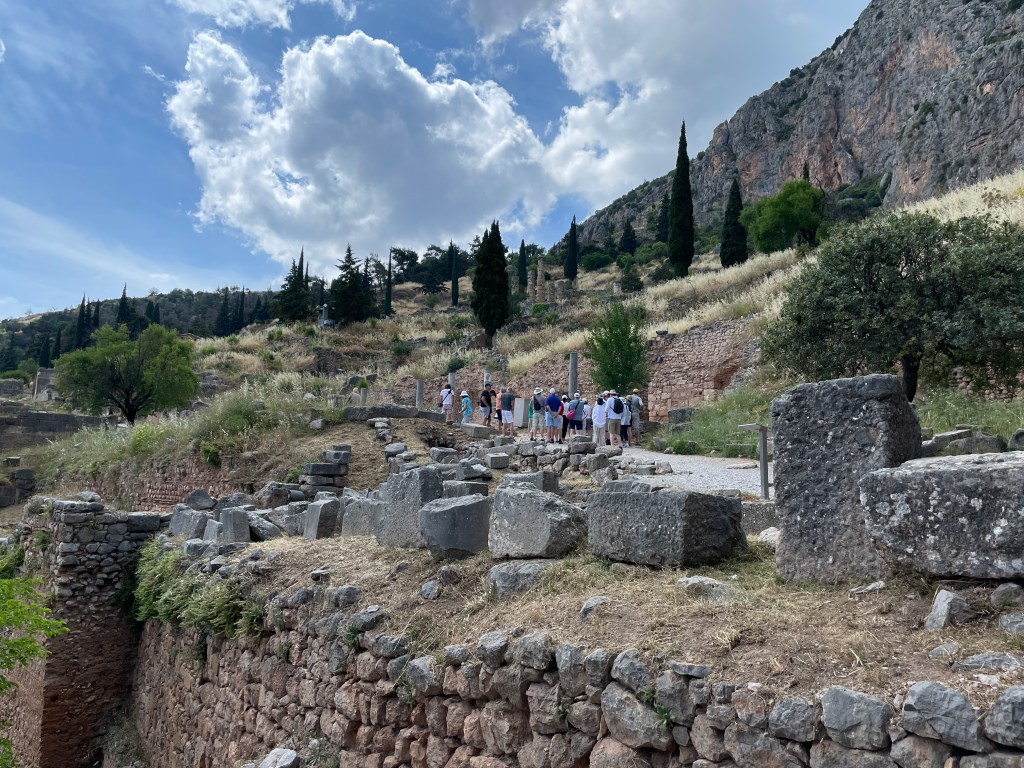
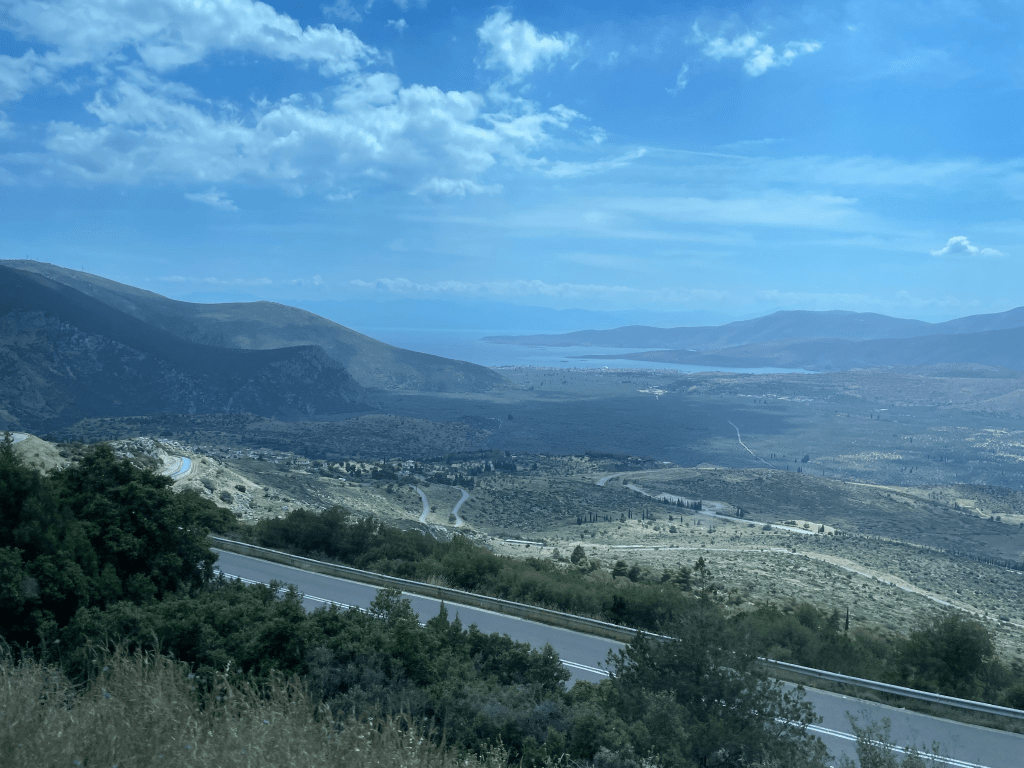
After a short bus ride into the mountains – a pretty hairball climb with a large bus on a small road, bringing to mind the cruise ship passing through the Corinth cancel – we reached the site of Delphi.
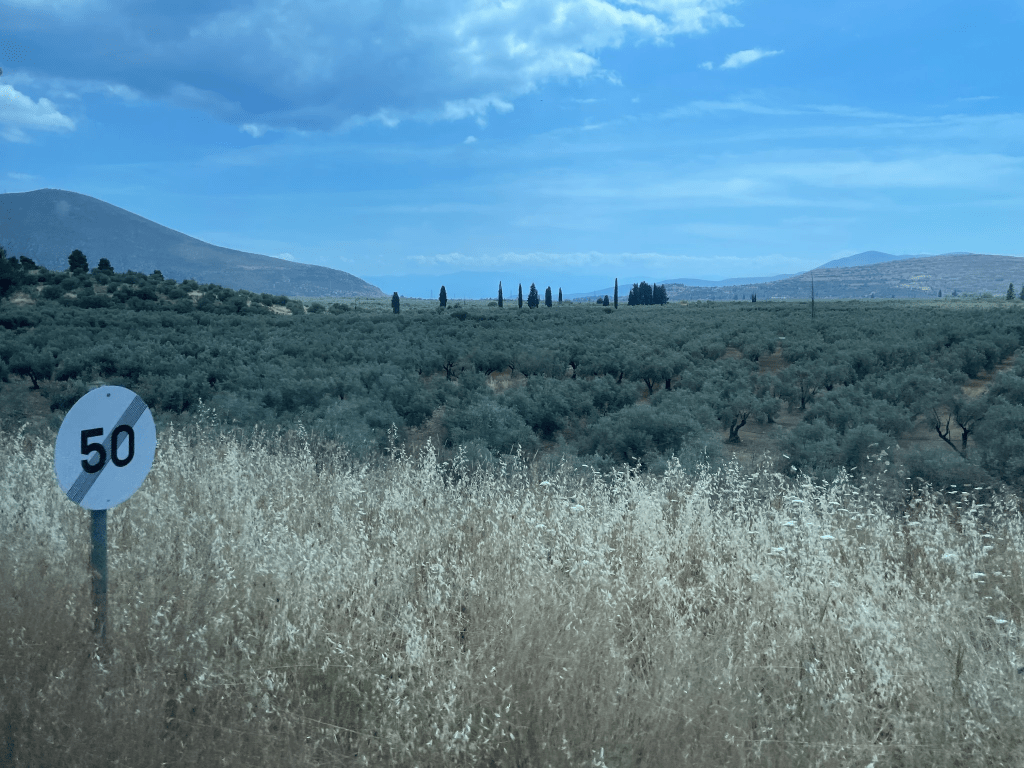
The guide in the bus was excellent and entertaining. Did you know the Greeks invented olives, and that Greek olive oil is much better than Italian olive oil? Of course!
From here, it was a hike up the side of the mountain to visit all the historical remains.


Remnants of an ancient shopping mall. The Oracles were not always available, and the mall kept visitors busy (and buying). If the shopkeepers engaged the visitors in conversation, and the personal information was relayed to the Oracles to establish credibility, well so be it 🙂
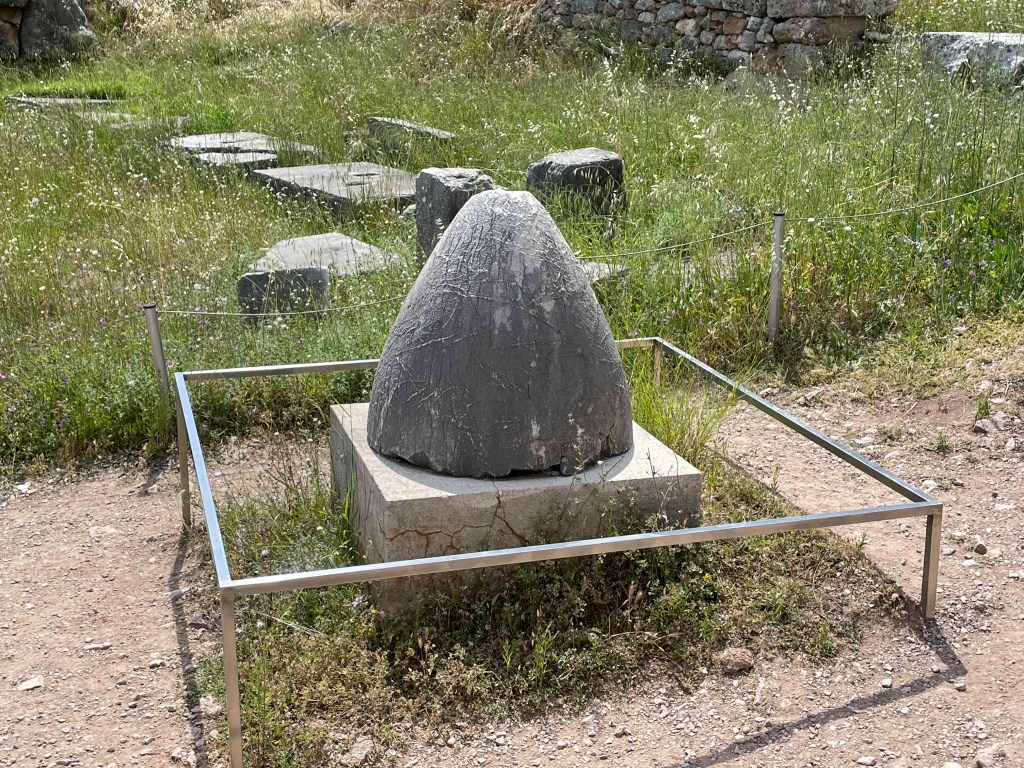
An ancient rocket nose cone? Well, no. But the parabolic shape’s strength was recognized a long time ago.
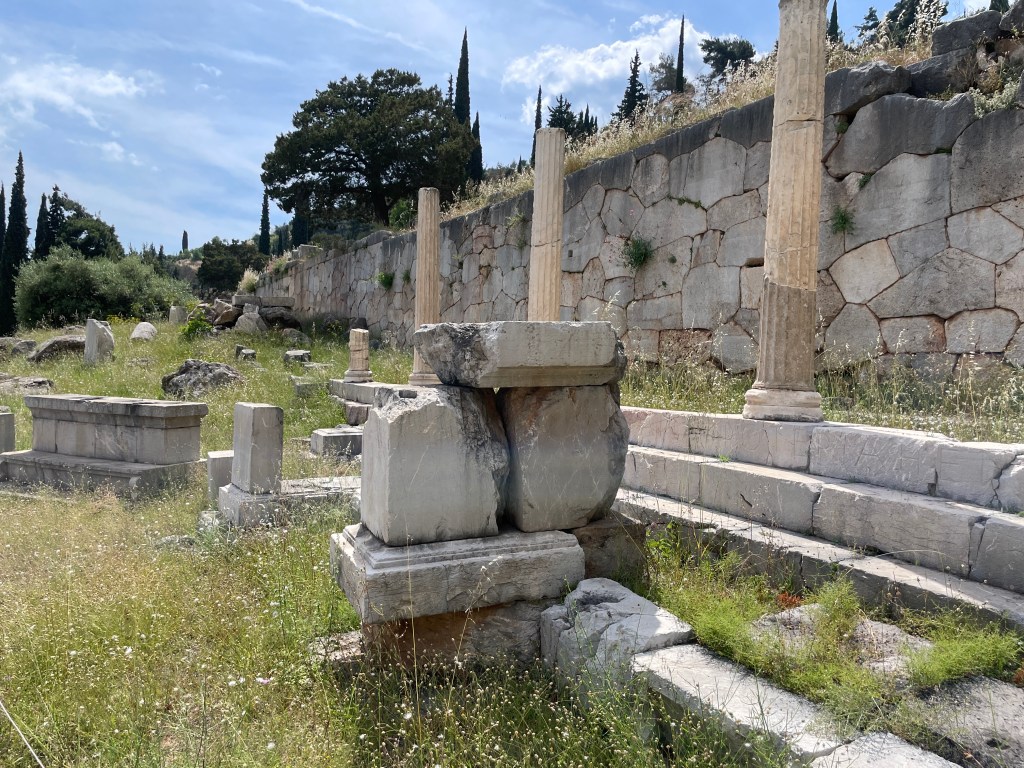
The wall of hexagons. On it, in tiny type, are written prophecies. If a prophecy was written about you, then you were “hexed”.
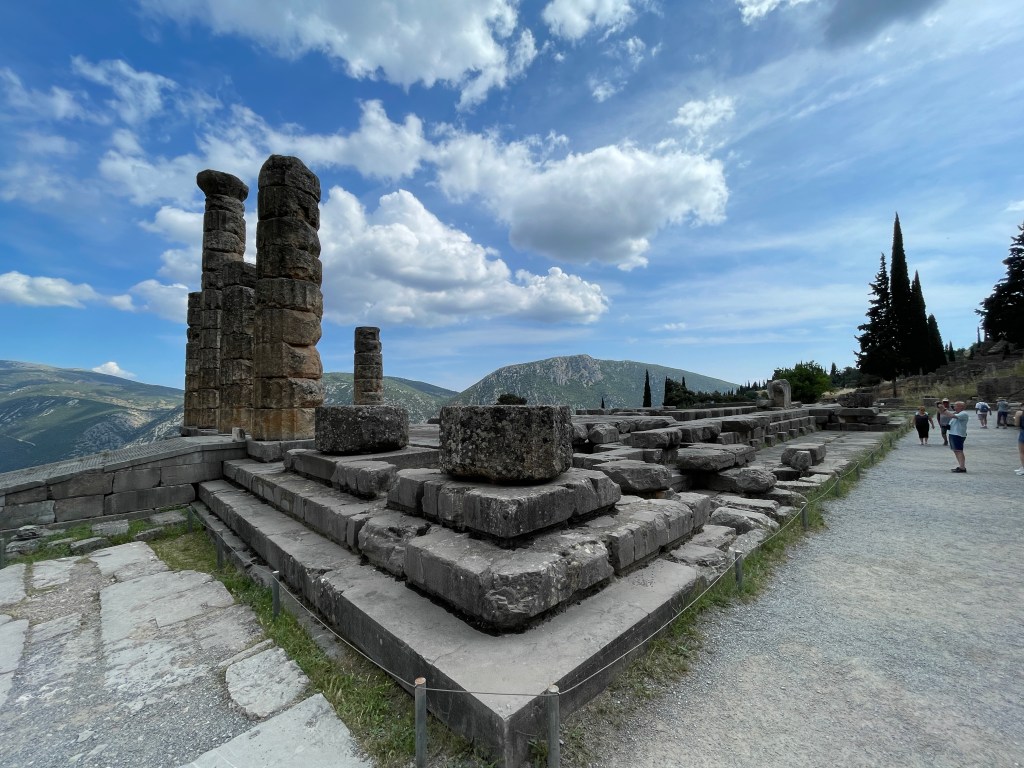
Foundation of an ancient temple. The foundations had channels for water; during construction, these helped ensure a level build, and after they provided drinking water (on one side) and a toilet (on the other).

Pretty nice design

This theater is in pretty good shape and is still used. The acoustics are reportedly excellent.

Inspecting the theater from above.
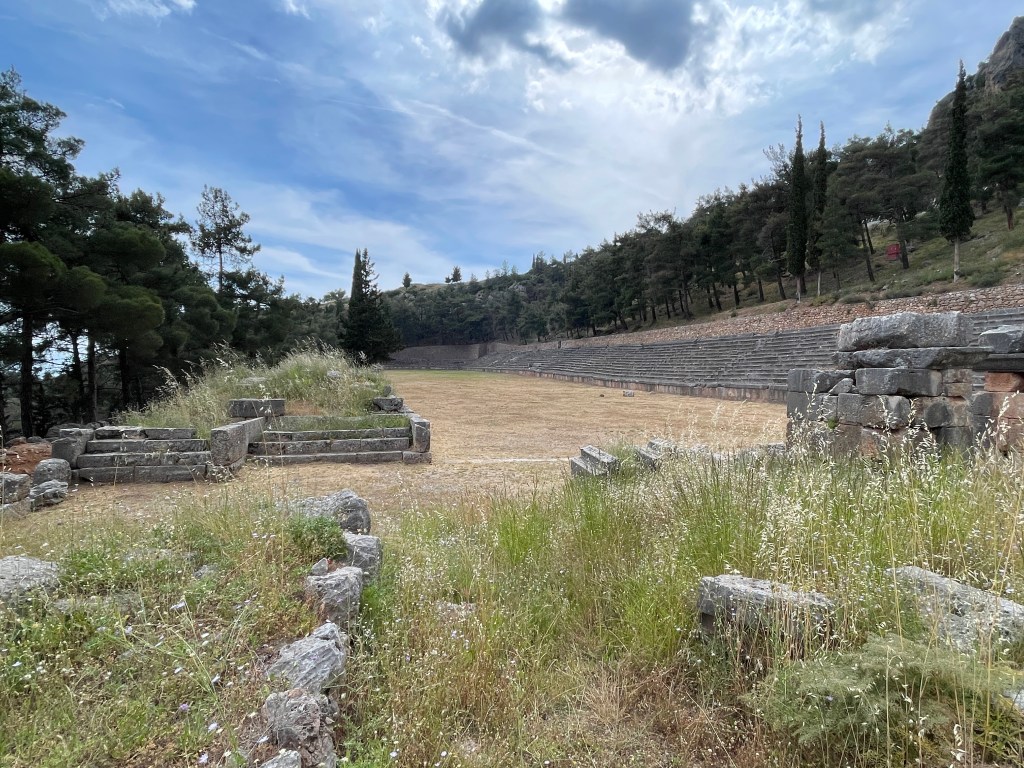
For the Greeks a stadia was a unit of length, similar to a furlong; a stadium was a theater for athletics, with a length of one stadia. I can assure it seems a long way to run!
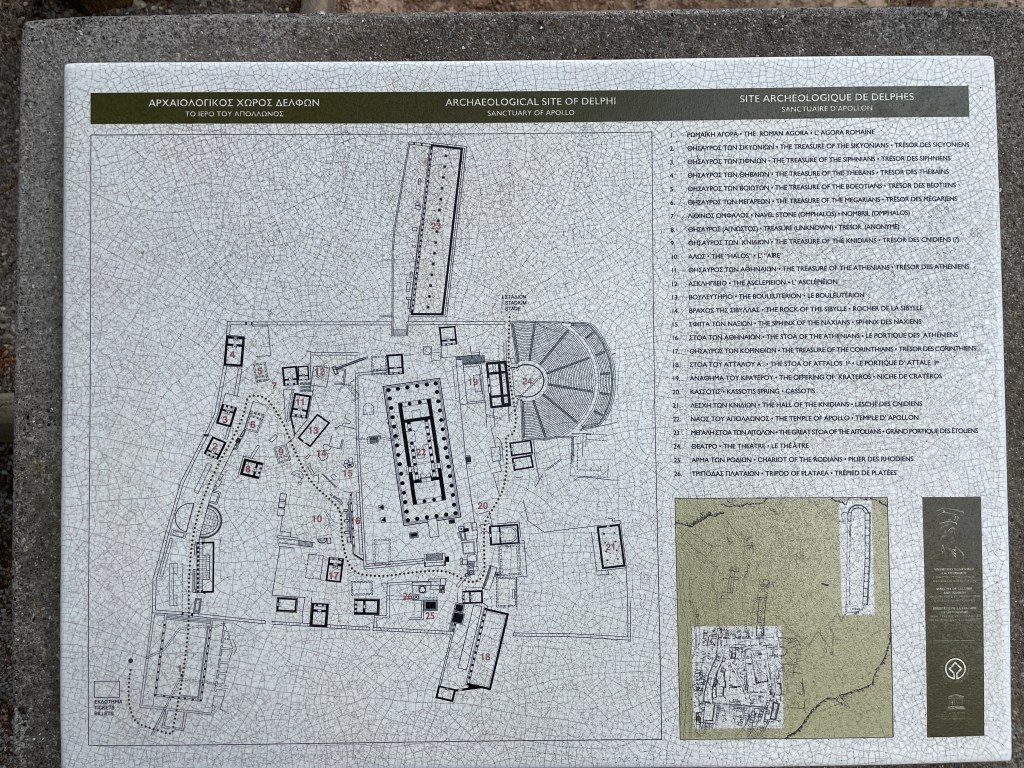
Plan of the site, much of which is at least partially preserved.
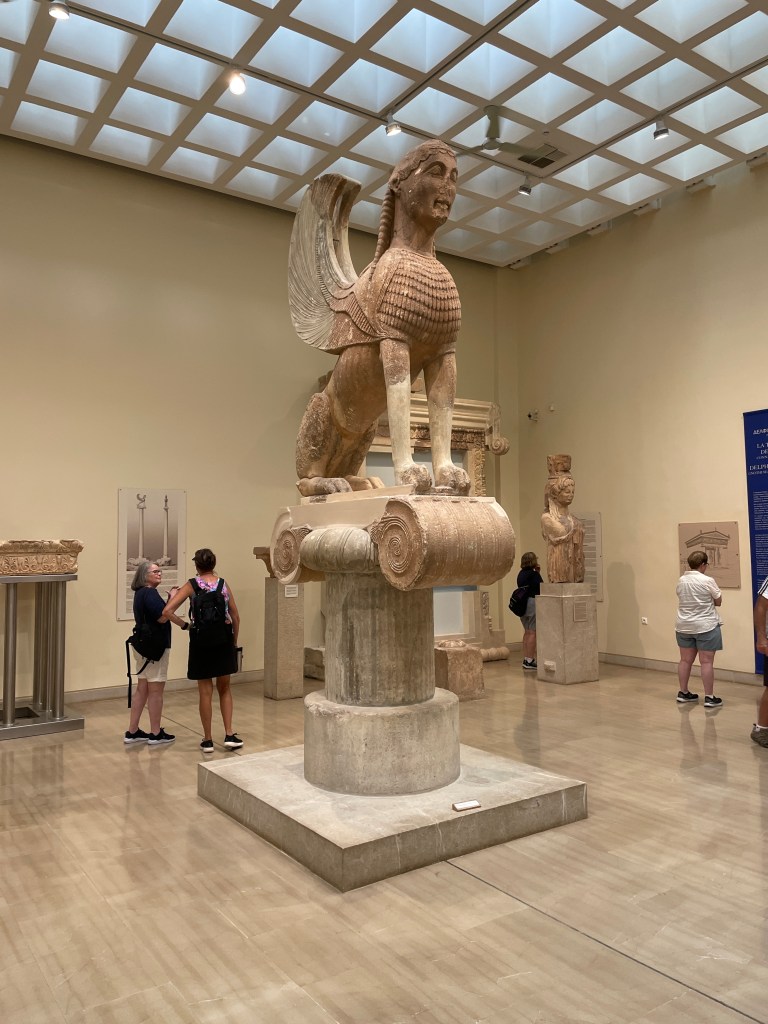
Many of the site’s artifacts have been exhumed and are displayed within the nearby museum.
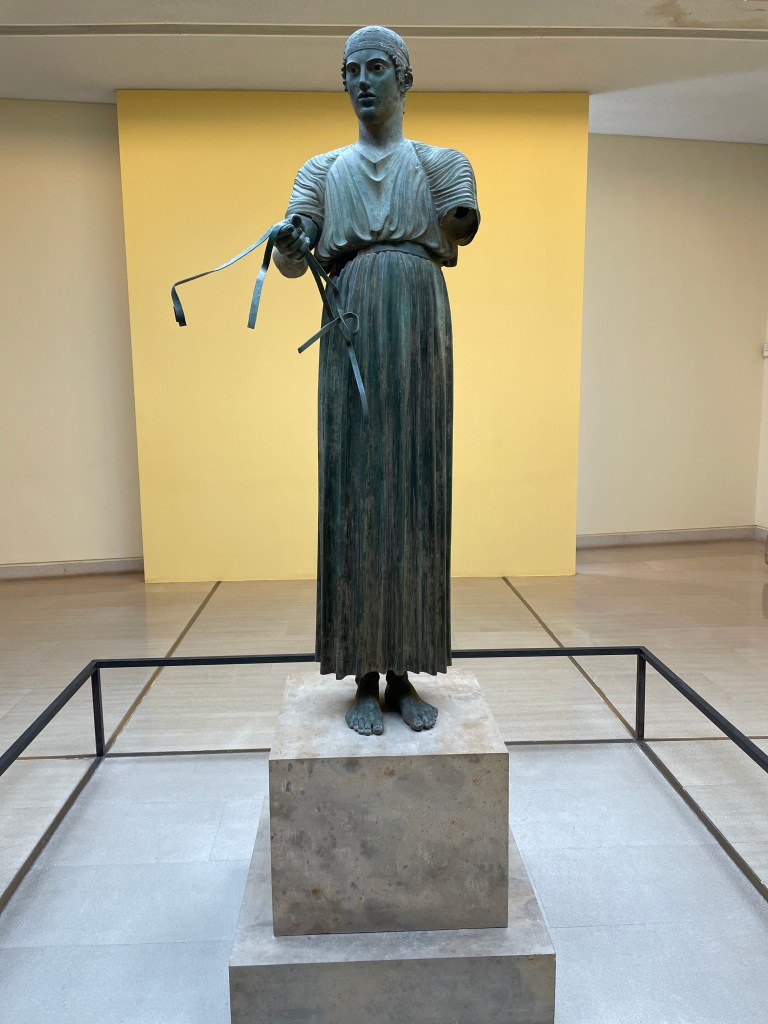
A well preserved Grecian. The difficulties of bronze casting were immense; first the sculpture was made of wax, then a mold was made from it, and then the wax was melted out to enable casting with metal. Whew.
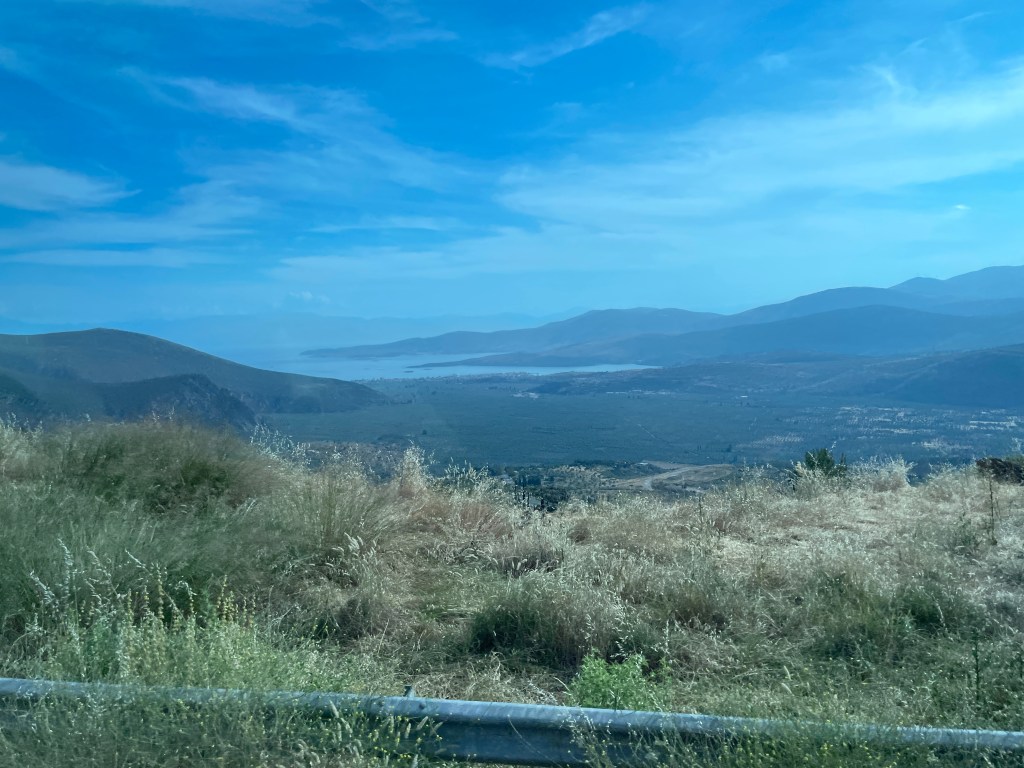
Beautiful view back down toward Itea on the right back down. Many many olive trees. Our guide sang their praises (everywhere you go in Greece, they have the best olives), and informed us they are exported to Italy for use in “Italian” olive oil. Okayyy.
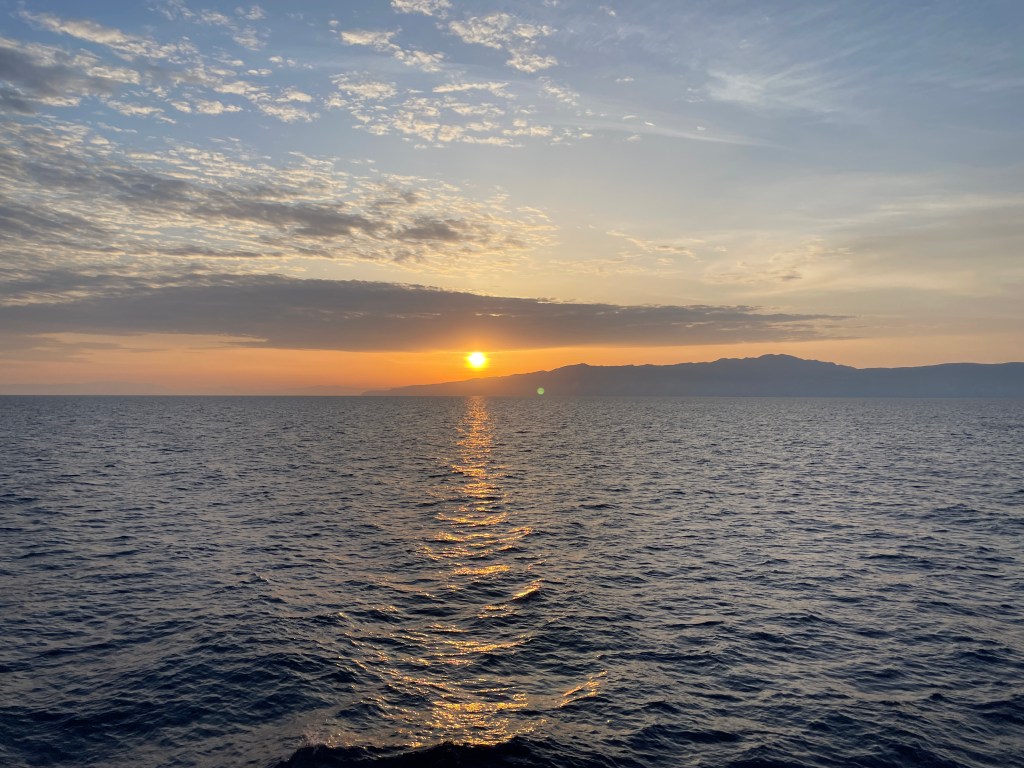
And so the sun sets on a marvelous day in the Ionian Sea!
 How did I get here